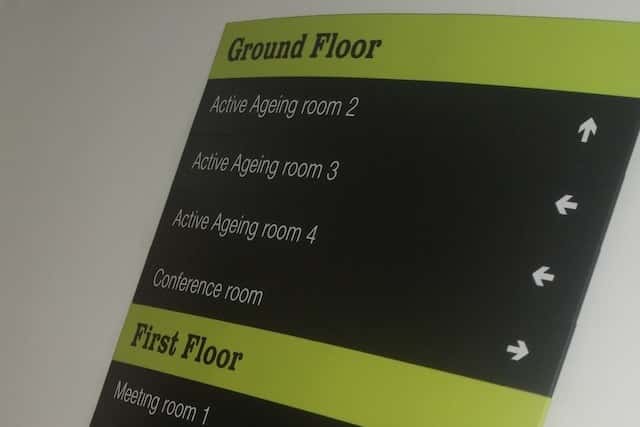
Common Wayfinding Signage Mistakes and How to Avoid Them
Wayfinding signage is often only noticed when it doesn’t work. Confusing layouts, unclear messaging or inconsistent design can quickly turn navigation into a frustrating experience.
Understanding common wayfinding signage mistakes can help organisations avoid problems before they arise.
Too much information in one place
One of the most common mistakes is trying to communicate too much at once. Overloaded signs can overwhelm users and make it harder to identify the information they actually need.
Good wayfinding signage breaks information into manageable steps, guiding users through a journey rather than presenting everything in a single sign.
Inconsistent terminology and design
Using different terms for the same destination or changing visual styles across a site creates confusion. Consistent wording, colours and symbols help users build familiarity and confidence as they move through a space.
Wayfinding signage should feel like part of a single, coordinated system rather than a collection of unrelated signs.
Poor placement of signs
Even well-designed signs won’t work if they’re placed in the wrong locations. Signs should appear at natural decision points such as entrances, junctions, lifts and staircases not after the decision has already been made.
A thorough site assessment is essential to identify where signage will be most effective.
Ignoring user behaviour
Wayfinding signage should be designed around how people actually move and think, not how a building looks on a floor plan. Factors such as sightlines, lighting, approach angles and user stress levels all influence how signage is perceived.
Designing with human behaviour in mind leads to signage that feels intuitive rather than instructional.
Updating wayfinding as spaces change
Buildings evolve over time. Departments move, layouts change and new functions are introduced. Wayfinding signage should be reviewed periodically to ensure it still reflects how a space is used.
Keeping signage up to date helps maintain clarity and prevents confusion as environments develop.